
From smoke to sanity: how I unintentionally used Pomodoro and rebuilt my focus after quitting
- Haggai Philip Zagury (hagzag)
- Medium publications
- July 27, 2025
Table of Contents
Originally posted on the Israeli Tech Radar on medium.
TLDR: For 25 years in the demanding world of IT, I had a secret productivity weapon. It wasn’t a tool or a certification; it was a ritual that could cut through the thickest mental fog and reset my brain on the most complex problems.
My secret weapon? A cigarette break. 😮
Whenever I hit a technical wall, felt overwhelmed by server alerts, or just needed to switch gears, I’d step away from my desk for a smoke. It wasn’t just the nicotine; it was the pause. The momentary disconnect, the change of scenery, the deep breath of (admittedly smoky) air — it was a forced reset. I’d return five minutes later with a clearer head, ready to dive back into deep work.

What I didn’t realize was that I had stumbled upon a powerful productivity principle, all wrapped up in a terrible habit.
It wasn’t the cigarette that brought clarity; it was the structured pause.
The Void: When a Good Decision Creates a New Problem
Quitting smoking was the best decision I ever made for my health, but it left a gaping void in my workday. The focus I had taken for granted began to crumble. Without those built-in, five-minute resets, I found myself pushing through tasks until I was mentally exhausted. My days became a long, blurry grind, leading to faster burnout and a noticeable drop in the quality of my work. After quitting, I initially struggled with restlessness and difficulty concentrating — common withdrawal symptoms as the brain adjusts to the absence of nicotine.
I had removed the bad habit, but I had also dismantled the accidental focus system it created. This realization forced me to do something I hadn’t done before: to think again about my own process.
 Changes attract more changes … which form new habits
This journey led me to the work of organizational psychologist Adam Grant and his book “Think Again.” Grant argues that in a rapidly changing world, the ability to rethink and unlearn is more critical than raw intelligence. I had to let go of the old belief that “smoking helps me focus” and, like a scientist, find the real cause and build a better experiment. My quest for a new system also led me to two other transformative books: “Atomic Habits” by James Clear and “15 Secrets Successful People Know About Time Management” by Kevin Kruse.
From Accidental Breaks to an Intentional System
My old smoking habit was a perfect, if unhealthy, example of what James Clear calls the “Habit Loop”: the cue (feeling stuck), the craving (for a reset), the routine (a cigarette), and the reward (mental clarity). The challenge was to re-engineer this loop with a better routine.
It turns out my unintentional method had a name: the Pomodoro Technique. Developed by Francesco Cirillo in the 1980s, this time management method involves breaking work into focused 25-minute intervals, separated by short 5-minute breaks. After four “Pomodoros,” you take a longer, more restorative break of 15–30 minutes.
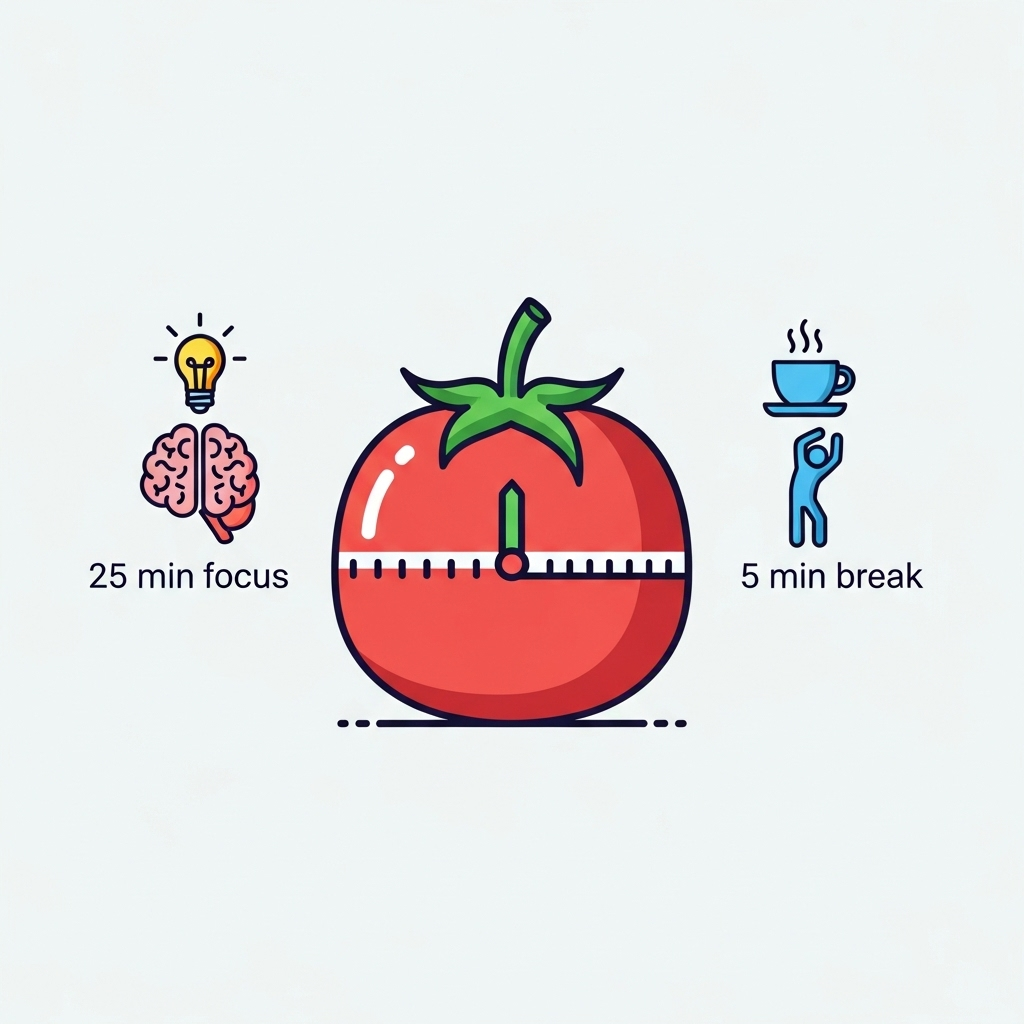 Here’s what google imagine had to say Pomadoro …
The technique is effective because it prevents mental fatigue, minimizes distractions, and gamifies your work. It acknowledges that the brain needs periodic rest to consolidate information and maintain focus. Brief diversions can dramatically improve your ability to concentrate for longer periods.
Here are the core principles I used to build my new, healthier focus system.
1. Manage Energy, Not Just Time
A key insight from Kevin Kruse’s work is that productivity isn’t about managing hours; it’s about managing your energy and focus. There are 1,440 minutes in a day, and the goal is to invest them intentionally. My old breaks weren’t just about pausing the clock; they were about recharging my mental batteries.
I started scheduling short, deliberate breaks to walk, stretch, or simply look out a window. This mimics the old pattern — work intensely, then fully disconnect — but with a healthy, re-energizing activity that improves well-being and prevents the decision fatigue that leads to lower quality work.
2. Make Good Habits Obvious, Attractive, and Easy
James Clear’s “Atomic Habits” provides a brilliant, four-law framework for behavior change. Instead of relying on willpower to fight distraction, the goal is to make focus the path of least resistance.
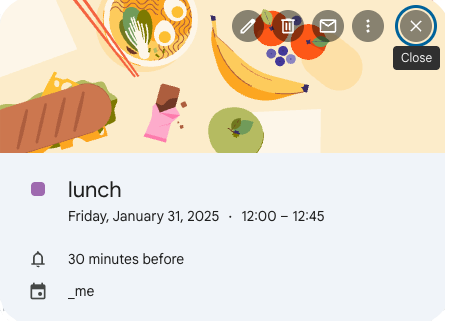 A simple example .. google calendar adds images (automatically) for certain key words
Make it Obvious: I started time-blocking my entire day. Instead of a vague to-do list, I have dedicated “Focus Blocks” on my calendar. This makes it obvious what I should be working on and when.
Make it Attractive: The reward for a focused work session is a guilt-free break. That feeling of accomplishment after a deep work block, followed by a moment of genuine rest, becomes a powerful, motivating feedback loop.
Make it Easy for you: This is where modern tools shine. As a DevOps engineer, I love automation. I found that AI-powered daily planners could automate schedules. I do not want to recommend a certain tool just know they are out there, feed them your task list, deadlines, and meetings, and they automatically organize then into focused sprints with built-in breaks.
This removes the friction of planning and makes sticking to the system almost effortless.
3. Focus on Systems, Not Just Goals
As James Clear points out, winners and losers often have the same goals. The difference is having a system of continuous improvement. If you can get just 1% better each day, the compound effect over a year is enormous.
You don’t have to perfectly map out your entire life from day one. Clear’s “Two-Minute Rule” is a powerful tool to overcome procrastination: a new habit should take less than two minutes to start. Want to build a focus routine? Start by scheduling just one 25-minute focus block. The goal isn’t immediate perfection, but relentless consistency. These small wins build trust in your system and shape your identity into that of a focused person.
How to Build Your Own Focus System (No Tech Skills Needed!)
You don’t need to be an IT pro to apply these principles. Here’s a simple, non-technical way to start:
Identify Your #1 Priority: At the start of your day, ask yourself the question from Kevin Kruse’s research: “What is my Most Important Task (MIT)?” This is the one thing that will make your day a success.
Schedule an Appointment with Your MIT: Don’t just write your MIT on a list. Schedule a 45 or 50-minute block on your calendar to work on it, as if it were an unbreakable appointment.
Choose Your Rhythm: The Pomodoro Technique (25 minutes on, 5 off) is a fantastic starting point, but feel free to experiment. A 2014 study found that the most productive people worked for 52 minutes followed by a 17-minute break. The key is finding a rhythm of focused work and genuine rest that works for you.
Leverage Simple Tools: You can start with just your phone’s timer and your calendar. If you want more automation, user-friendly tools like Sunsama or Reclaim.ai are designed for anyone and can act as a personal assistant to build your schedule for you.
Review and Refine: At the end of the week, take 15 minutes to look back. What worked? What didn’t? The goal is progress, not perfection. This aligns with Adam Grant’s principle of “thinking like a scientist” — constantly testing and refining your approach based on new data.

Reclaiming Your Focus, Healthily
My journey from unhealthy smoking breaks to a deliberate, structured focus system has been transformative. It’s not about being rigid; it’s about giving yourself the structure needed to do your best work and the permission to rest and recharge. By managing your energy, building better habits, and using simple tools to support your system, you can clear the fog, reduce overwhelm, and achieve more — one focused block at a time.