Raising the Bar: Docker native clustering with Swarm | Hebrew, Meetup

Raising the Bar: Docker native clustering with Swarm | Hebrew, Meetup

Table of Contents

From development workstation(s) to * || anywhere (Docker makes it platform agnostic considering docker-machine drivers for aws, digitalocean etc etc ).

Replacing “packaging” methodology with “shipping” methodology by transforming traditional deliverables such as war / jar / rpm etc to containers from development to staging & production. - discuss docker files and gradle & maven impl

Outline the variations between the different environments and the key components/enablers of the solution.

Video


Presentation slides

comments powered by Disqus

Related Posts

Chef & Vagrant for Dev-in-DevOps, Meetup (Workshop)

Chef & Vagrant for Dev-in-DevOps, Meetup (Workshop)

Cloud-Native | there’s no place like 127.0.0.1 Haggai Philip Zagury DevOps Group & Tech Lead, Tikal Knowledge

Read More
Shorts working at Tikal

Shorts working at Tikal

As kubernetes matures into the standard de facto Operating System of the Cloud, in addition to a shift in deployment methods such as GitOps and Continuous delivery paradigms - automation of security is one of our main concerns

Read More
AWS KMS Best Practices: Securing the Secret Ingredients of Your Infrastructure

AWS KMS Best Practices: Securing the Secret Ingredients of Your Infrastructure

TL;DR

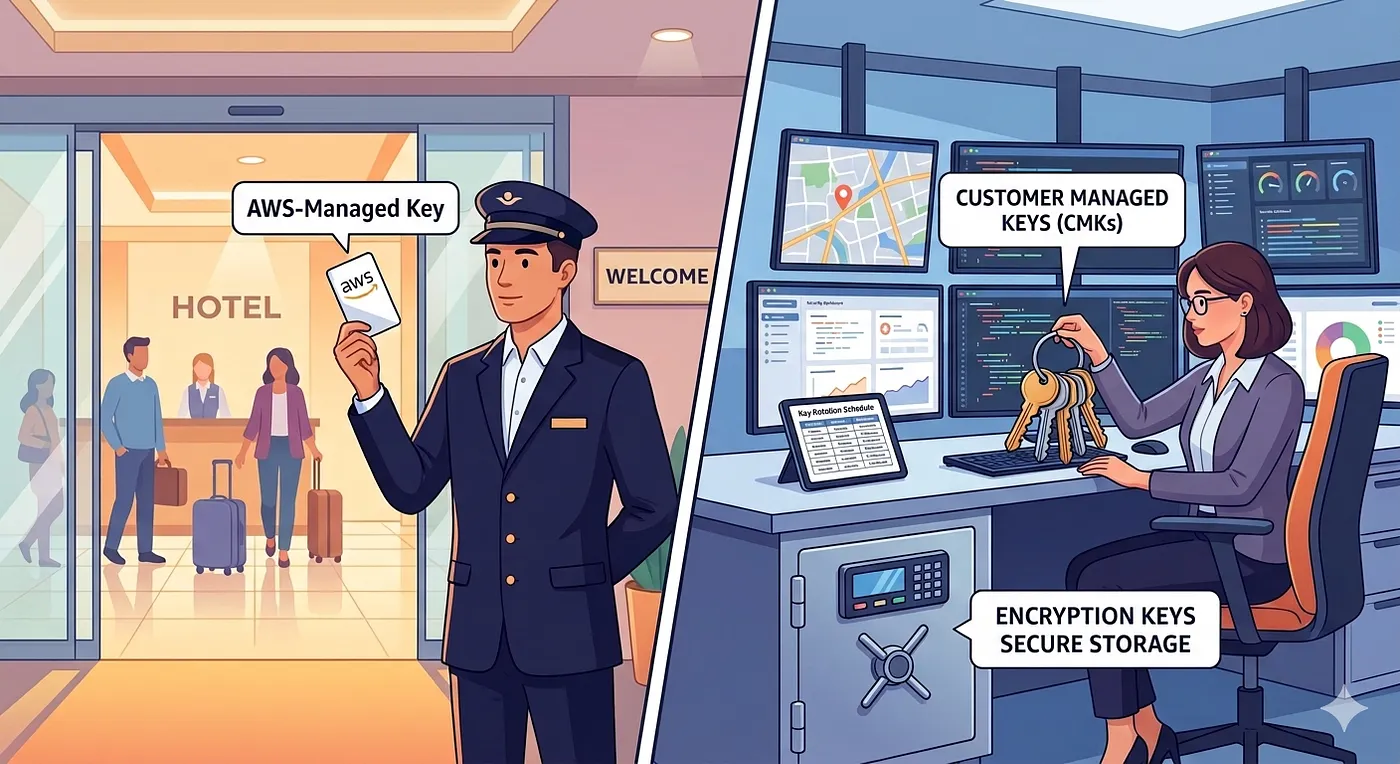
AWS KMS gives you three flavors of encryption keys — AWS-owned, AWS-managed, and Customer Managed Keys (CMKs). For anything resembling production, CMKs are the only real choice: they give you control over rotation, deletion, cross-account access, and most critically — the ability to kill a key in an emergency. Think of KMS like a hotel’s key management system: the entrance guard has one master card, but the security manager holds the safe with all the master keys. Designing your KMS strategy right is what keeps you from handing that safe to an attacker.

Read More